How It Works
What "Ice-Hardened" Means for a Kitchen Knife
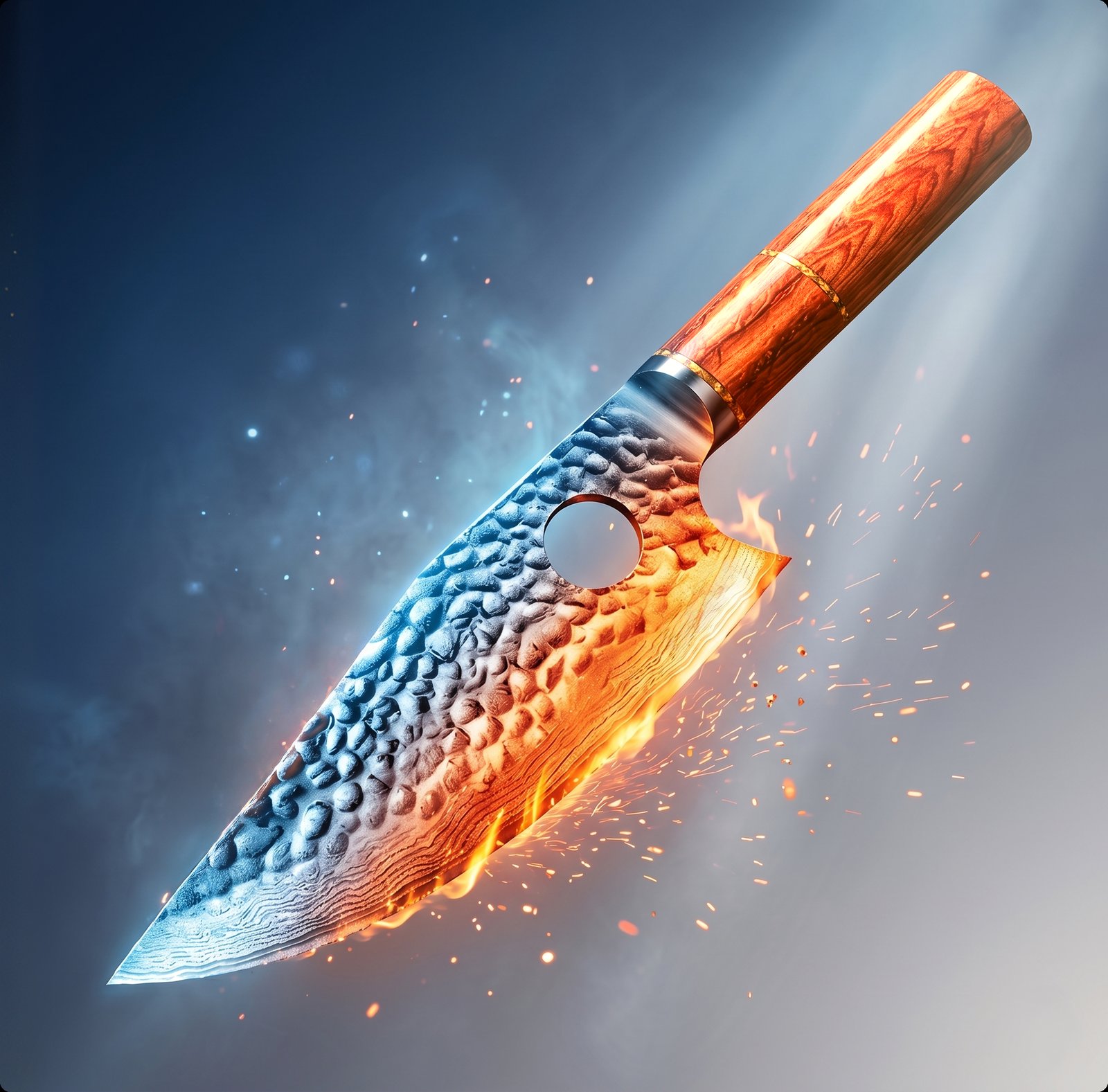
"Ice-hardened" sounds like marketing, but it describes a real step in heat-treating steel. Here is what it is and what it changes for someone cooking at home.
The short version
After the blade is heated and quenched, it is chilled to deep sub-zero temperatures. According to the seller, this knife's steel is cooled below -100 °C as part of that process.
What the cold step does
- Harder, more wear-resistant steel. The deep chill pushes more of the steel's internal structure into martensite, the hard form of steel that holds an edge.
- More stable blade. It also relieves stress left in the metal from earlier steps, which the seller says improves the overall stability of the blade.
- Edge that lasts longer. The practical result: it stays sharp for longer stretches between sharpenings.
An ice-hardened knife still needs care. Hand-wash and dry it, use a wood or plastic board, and hone it now and then. It simply asks for that less often than an ordinary knife.
The steel itself
The seller describes the blade as high-quality stainless steel, shaped with techniques inspired by traditional Japanese knife-making. Stainless steel resists rust and staining better than plain carbon steel, which suits everyday home use.
Opens the seller's official product page in a new tab.